Table of Contents
- What Small Batch Gin vs Commercial Gin Really Means
- How Gin Is Made: From Base Spirit to Bottle
- Grape Spirit Gin vs Grain Spirit Gin
- Gin Botanicals and Flavour: Where the Difference Shows
- Small Batch vs Commercial Gin: Side-by-Side Comparison
- How to Taste Gin and Judge What You're Paying For
- Cost, Consistency and Sustainability: The Trade-Offs
- Frequently Asked Questions
Last Updated: October 21, 2026
What Small Batch Gin vs Commercial Gin Really Means
Small batch gin is a gin produced in limited runs on a single still, while commercial gin is made in continuous, large-scale production. That is the short answer.
In Australia, gin is defined by the Food Standards Code as a spirit drink made by flavouring ethyl alcohol with juniper berries, at a minimum of 37.5% alcohol by volume.
At Three Little Birds Distillery, we make our gin in the Clare Valley in runs small enough that we know every bottle.
The limits of the term small batch
Batch size is not regulated, so the same words describe wildly different operations: a producer filling a few hundred bottles from a 200-litre pot still and one filling tens of thousands from a column still can both use "small batch."
What the term usually signals in practice:
- A single still, run by hand, with cuts made by the distiller
- A batch you can trace to a date and a still
- A producer small enough that the person who distilled it will answer your email
What it does not guarantee: better quality, local ingredients, or a higher price being justified. Treat it as a starting point for questions, not a verdict.
How Gin Is Made: From Base Spirit to Bottle
Gin production follows the same broad path whether the run is 200 litres or 20,000: make or buy a neutral base spirit, add juniper and other botanicals, distil, dilute and bottle.
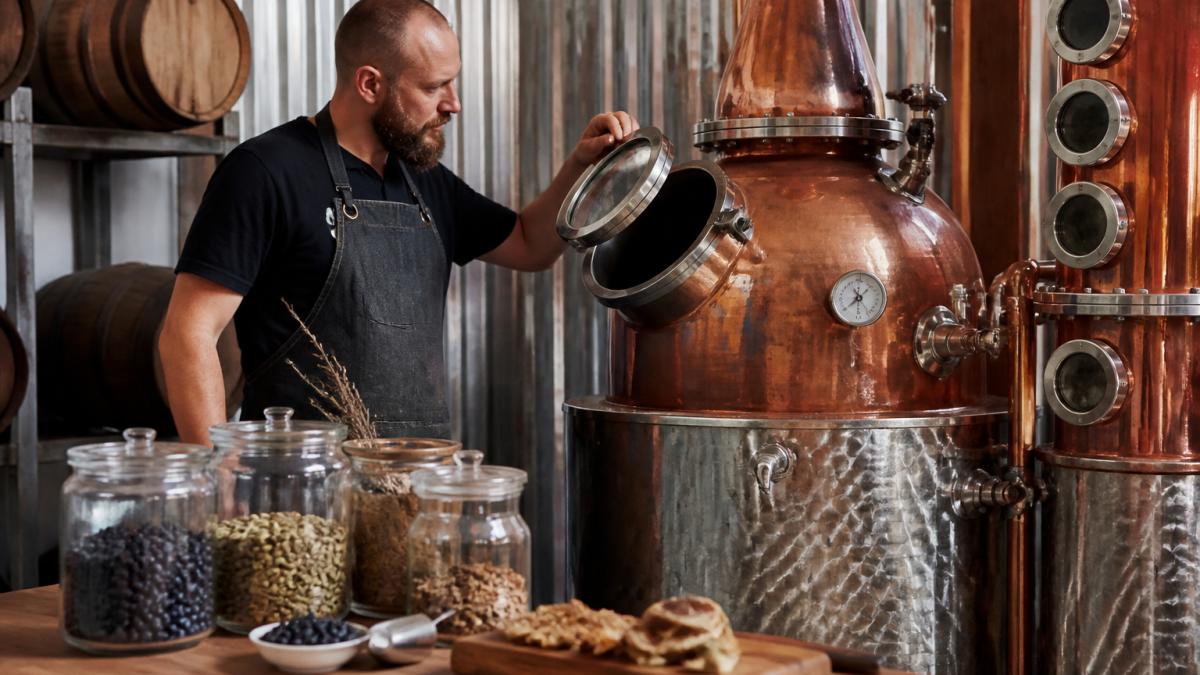
Most gin is made by steeping or vapour-infusing botanicals in a neutral spirit, then redistilling. The distiller separates the heads, hearts and tails, and only the hearts go into the bottle.
Pot stills versus column stills
The still is the clearest technical divide. A pot still distils in batches: you fill it, run it, clean it, and start again.
Pot stills give the distiller more control over character; column stills give volume, consistency and a lighter, cleaner spirit. Neither is inherently better, a well-made column-distilled gin can be excellent and a badly cut pot-distilled gin can be harsh.
Grape Spirit Gin vs Grain Spirit Gin
The base spirit is the quiet variable most drinkers never consider. Grain spirit, usually wheat or barley, is the global default: neutral, cheap at volume and near-flavourless.
We make our base spirit from leftover wine grapes, a practical choice as much as a flavour one.
How the two compare in the glass:
- Grain spirit: crisp, clean, lets botanicals sit forward
- Grape spirit: rounder, slightly weightier, blends botanicals into a smoother whole
- Neither: sweeter or stronger by default, since both are distilled to a neutral starting point
If you are coming from whisky, a grape-spirit gin is often the easier entry point. The texture is closer to what you are used to.
Gin Botanicals and Flavour: Where the Difference Shows
Juniper must dominate for a spirit to be called gin, but everything around it is where small batch and commercial gins part company. Commercial recipes are built for consistency across enormous volumes, so they lean on a tight, repeatable set of botanicals.
Native Australian botanicals are a good example.
A common mistake is assuming more botanicals means more flavour. A focused blend of six, balanced well, will often outperform a list of twenty.
Small Batch vs Commercial Gin: Side-by-Side Comparison
Most comparisons stop at a table of adjectives. The useful version explains the mechanism behind each row, because batch size is a proxy for decisions, not a quality grade.
| Factor | Small Batch Gin | Commercial Gin | What actually drives the difference |
|---|---|---|---|
| Batch size | Limited runs, often a single still | Continuous or very large runs | Still type and run length, not a legal threshold |
| Still type | Usually pot still | Often column still, sometimes pot | Pot stills separate by batch; column stills separate continuously by boiling point |
| Consistency | Slight variation between runs | Highly repeatable | Fixed recipe and cut points versus batch-by-batch adjustment |
| Botanicals | Can rotate, source locally, buy small lots | Fixed, standardised blend | Volume contracts and seasonal availability |
| Base spirit | Often grape, wheat or barley, sometimes house-made | Usually purchased neutral grain spirit | Cost per litre and texture |
| Price | Higher per bottle | Lower per bottle | Ingredient, labour, equipment, distribution and tax per litre |
| Traceability | Often direct from distiller | Rarely traceable to a batch | Scale of record-keeping and route to market |
| Best for | Sipping, gifts, exploring flavour | High-volume cocktails, bars | Character versus dependability at volume |
What batch size does and does not imply
A smaller run gives the distiller more chances to adjust. On a pot still, cut decisions, where to separate heads, hearts and tails, are made on every run, so a small producer can tighten a harsh cut or lean into a botanical that performed well that season.
What batch size does not imply:
- Better ingredients. A small producer can buy poor botanicals; a large producer can buy excellent ones at contract scale.
- Higher strength. Both must meet the same minimum of 37.5% alcohol by volume under the Food Standards Code.
- Local sourcing. "Small batch" says nothing about where the juniper, citrus or base spirit came from.
Batch size tells you how much the distiller can intervene; whether they intervene well is answered by tasting and by asking about cut points and botanical sourcing.
The cost mechanics behind the shelf price
Price differences are usually explained as "scale", which is true but unhelpful. The concrete drivers:
- Base spirit: commercial producers buy neutral grain spirit in bulk at a low cost per litre; a small distiller making spirit from leftover wine grapes carries the fermentation, distillation and storage cost themselves.
- Botanicals: small lots of native botanicals such as lemon myrtle, wattleseed and finger lime cost more per kilogram than contracted volumes of juniper, coriander and citrus peel.
- Labour: hand cuts, small bottling runs and hand-labelling cost more per bottle than automated lines.
- Equipment: a pot still is cheaper to buy but slower per litre; a column still is a large capital cost spread across volume.
The practical rule: buy small batch when you want to taste the producer's hand and the botanicals; buy commercial when you need a dependable mixer at volume. Neither choice is a judgement on the other drinker.
How to Taste Gin and Judge What You're Paying For
Most tasting guides tell you to nose, sip and add tonic. That is fine for enjoyment but useless for comparison, because price, packaging and the word "small batch" all bias what you think you taste. The method below strips those cues out.
A blind comparison you can run at home
You need two gins of similar style, two identical clean glasses, a measuring jigger, a neutral tonic and a notepad. The point is to control every variable except the gin.
- Bag the bottles. Have someone else pour, or decant both into unmarked glasses. Do not read the labels until the end.
- Serve identically. 30 mL of gin, neat, at the same temperature, in the same glass shape. Note the strength on the label first, a 37.5% gin and a 45% gin will taste different for reasons unrelated to quality.
- Nose, then rest. Smell, wait 30 seconds, smell again. Juniper should lead in both; note whether citrus, floral or spice notes sit on top or underneath.
- Add a measured splash. Around 10 mL of room-temperature water opens the aromatics. Taste again and note texture, rounder versus crisper is a real signal of base spirit.
- Repeat with tonic. Use the same ratio for both, for example 30 mL gin to 90 mL tonic, and the same garnish or none. A gin that holds its character against tonic is doing more work than one that disappears.
- Score, then reveal. Rate juniper presence, balance, texture and finish out of five before you look at the labels. Compare your scores with the prices.
What the comparison usually reveals
The most common pattern is that tasters prefer one gin in a gin and tonic and the other neat, the choice is about use case, not absolute quality. A second is that a higher-priced bottle wins on texture and finish but not aroma, because texture is where base spirit and cut decisions show up most clearly.
A few concrete things to listen for:
- Juniper lead: if citrus or floral notes dominate, the balance is off for the style, regardless of price.
- Alcohol edge: a sharp burn on the finish often points to a wide cut or a higher strength, not a flaw in the botanicals.
- Texture: grape spirit tends to feel rounder; grain spirit tends to feel crisper. Neither is better, but the difference is real and repeatable.
- Length of finish: a clean, lingering juniper-and-citrus finish is a stronger quality signal than a long list of botanicals on the label.
Judging what you are paying for
Once the labels are back, match your scores to the price and the claims on the bottle. A small batch gin earning its price should show it in texture, finish or distinctive botanicals; a commercial gin should show it in consistency and mixability. If a pricier bottle scores the same as a cheaper one blind, you are paying for the story, not the liquid, a legitimate choice, as long as you know you are making it.
Cost, Consistency and Sustainability: The Trade-Offs
Price differences between small batch and commercial gin come down to scale, not markup alone.
Consistency cuts the other way. Commercial gin tastes the same every time, which matters if you run a bar.
Sustainability is the third trade-off, and where small producers can lead. Spent botanicals can be repurposed rather than landfilled, and waste streams like leftover grapes can become base spirit.
Choosing between small batch gin and commercial gin comes down to what you want from the bottle: character and traceability, or consistency and value at volume. Book a tasting at our Sevenhill room to compare for yourself, or order online and taste the difference the batch makes.
Frequently Asked Questions
What is the difference between small-batch gin and commercial gin?
The main difference comes down to production scale and control. Small batch gin is distilled in smaller runs, often on pot stills, which lets the maker adjust botanical blends batch by batch. Commercial gin is produced at large scale, usually on column stills, with tight quality control for consistency. That does not automatically make one better, but it does change how much variation and character you get in the bottle.
Is small batch gin worth the extra cost?
It depends on how you drink gin. If you mostly mix gin and tonic and want a reliable, affordable bottle, commercial gin does that job well. If you drink gin neat or in a martini and want to taste the botanicals, small batch gin gives you more to explore. Pricing varies by producer, batch size and ingredients, so check the distillery's website for current prices.
Does the base spirit affect gin's flavour?
Yes, though juniper and botanicals do most of the talking. A grain spirit tends to be neutral, letting the botanical blend lead. A grape spirit gin can carry a rounder, slightly fruitier texture that changes how the gin feels on the palate. Neither is better, but if you compare a grape spirit gin with a grain spirit gin side by side, the mouthfeel difference is usually noticeable.
What should I look for when choosing a small batch gin?
Look for the batch size, the still type and where the botanicals come from. A producer that names its botanical sources and distils in small runs gives you more to judge. Taste before you commit to a bottle if you can, and note the aroma, the juniper hit and the finish. Local ingredients and sustainable production, such as repurposing spent botanicals, are worth asking about directly.