Table of Contents
- Preparing for Your First Gin Tasting Room Visit
- What to Expect at a Gin Tasting
- Essential Gin Tasting Room Etiquette
- How to Taste Gin Properly
- Gin Tasting Questions to Ask Your Pourer
- How Long Does a Gin Tasting Duration Typically Last
- Common Mistakes to Avoid
- Responsible Tasting and Getting Home Safely
- Frequently Asked Questions
Last Updated: October 18, 2026
Preparing for Your First Gin Tasting Room Visit
Visiting a gin tasting room for the first time can feel daunting if you're not sure what to expect.
Before you arrive, check the distillery's website for opening hours and booking requirements, some venues require advance reservations, especially for groups.
Plan to spend 45 minutes to an hour there. Arrive with a clear head and a light snack beforehand, and plan how you'll get home safely if you're driving.
What to Expect at a Gin Tasting
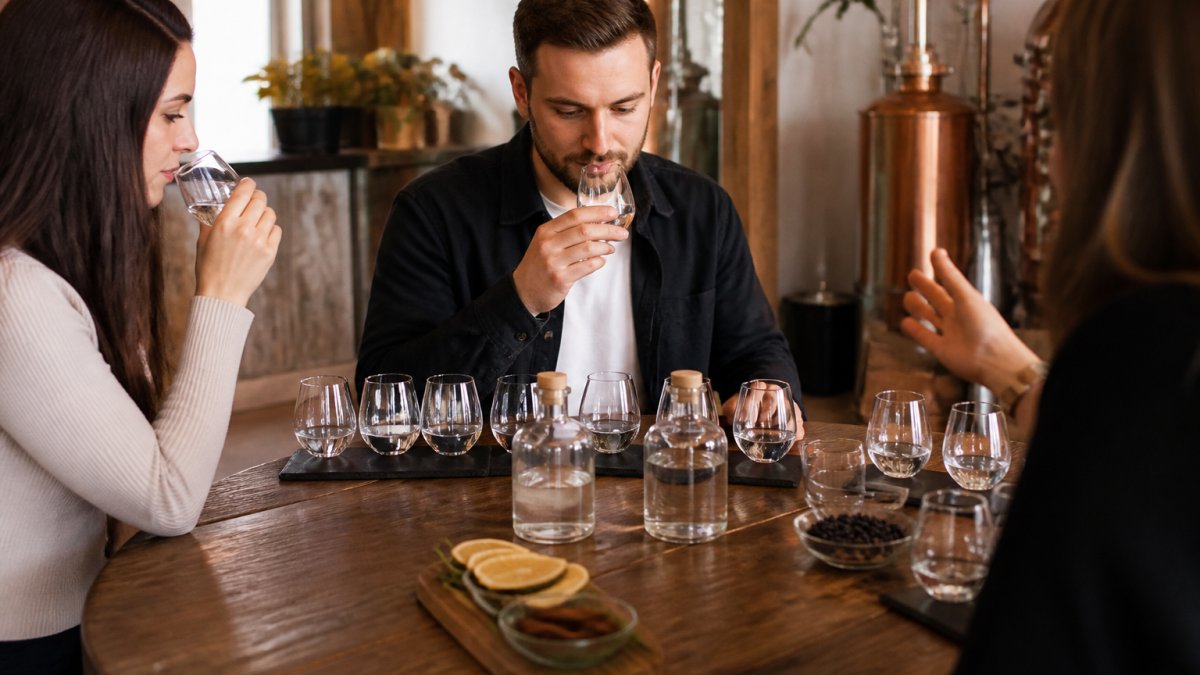
A gin tasting room is designed to let you focus on the gin: neutral lighting, no strong odours, and a tasting bar with glassware set out. Unlike a winery, gin is a spirit, so the vocabulary and serve formats differ.
The tasting flight structure
A tasting flight is a curated selection of gins served in small pours, typically 15-30 millilitres each, smaller than a wine tasting pour because the alcohol strength is much higher.
Gin flights come in a few common formats, and knowing them helps you choose:
- Neat flight, each gin served at room temperature with no mixer, sometimes with a drop of water. Best for comparing botanicals.
- Gin-and-tonic flight, each gin paired with a measured tonic and garnish. Easier on beginners but the tonic can mask subtle notes.
- Botanical or themed flight, gins grouped by style (citrus-led, juniper-forward, navy strength, contemporary) or by production method.
- Distillery-only flight, the venue's own range, often including a limited release not available elsewhere.
Flights usually arrive with tasting notes beside each glass. Read them, but trust your own impressions. If you have a choice, ask the pourer which format suits a first visit, most steer beginners towards a short neat flight followed by one G&T.
Tasting room layout and service
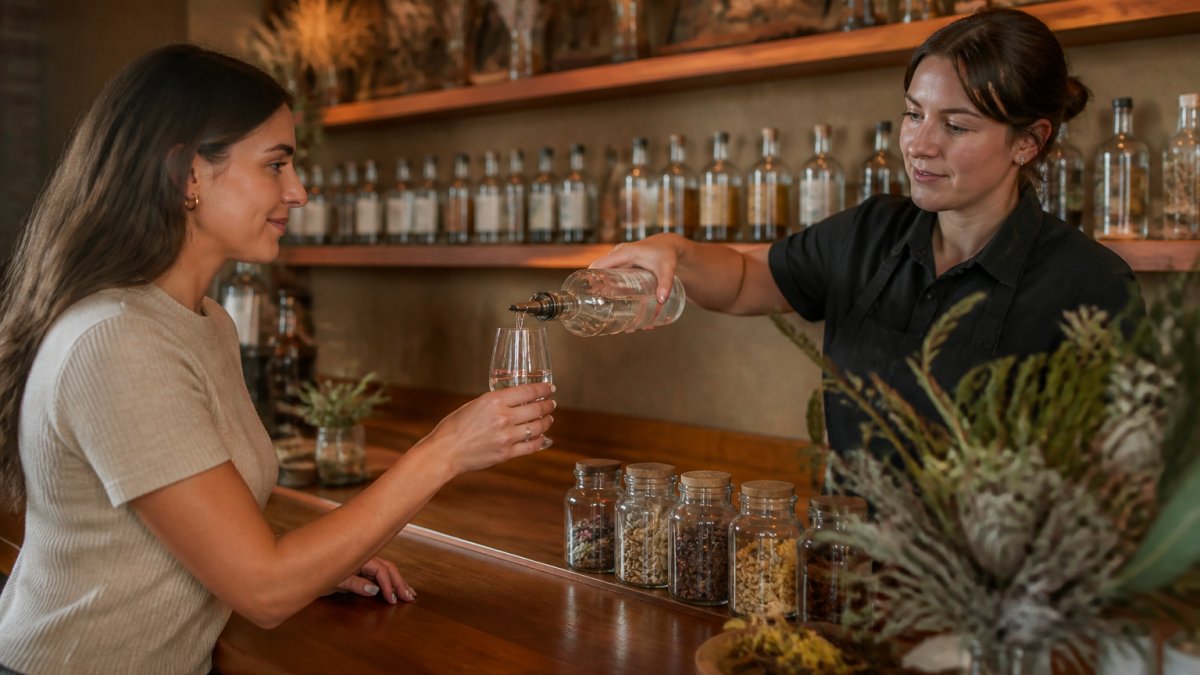
The pourer (sometimes called a server or ambassador) is there to guide you, explaining each gin, answering questions, and pouring samples. They're not judging your knowledge. Most tasting rooms offer water and palate cleansers between pours; use them to reset your mouth so each gin tastes fresh.
How a gin room differs from a winery
A few conventions trip up winery regulars:
- Strength, not vintage. Gin is typically 37-48% ABV, so pours are smaller and pacing matters. The conversation is about botanicals and distillation, not vintage.
- Serve style is part of the tasting. You may be asked whether you'd like it neat, with tonic, or with a garnish, there's no wrong choice.
- Garnish is functional. A citrus peel or rosemary sprig complements the botanicals, not decorates. Smell it alongside the gin if offered.
- Spit cups are normal. Many gin rooms provide them, especially for neat flights. Using one is polite, not wasteful.
Policies and costs vary by venue
Sample sizes, prices, booking rules and food policies vary by venue, so check ahead. Confirm whether flights are fixed or you can choose samples, whether a deposit or cancellation window applies, whether food is available on site, whether there's a designated-driver option, and whether the bar and seating are accessible. A quick look at the booking page answers most of these.
Essential Gin Tasting Room Etiquette
Understanding gin tasting room etiquette for beginners removes anxiety and helps you enjoy the experience. The core principle is simple: be respectful of the space, the pourer, and the product.
Arriving and greeting the pourer
Greet the pourer warmly and mention if it's your first tasting, they'll adjust their pace and explanations. Share preferences upfront ("I prefer citrus-forward gins") so they can tailor the experience. Arrive on time; if you're early, wait at the entrance rather than interrupting a pour, and call ahead if you're running late.
Handling your tasting glass correctly
Hold your glass by the stem, not the bowl, so your hand doesn't warm the gin. Hold it at chest height when the pourer is about to serve. Never reach across the bar, let the pourer place it in front of you. Keep the glass on the bar or table when not smelling or tasting, and leave empty glasses for the pourer to clear.
Requesting samples and declining politely
To try a gin outside your flight, ask politely: "Could I try a sample of that one?" If it's unavailable, accept gracefully. Declining is equally fine, you don't need to finish every sample. Say "I'm good for now, thank you." If a gin isn't to your taste, be kind: "It's not quite for me" rather than criticism.
How to Taste Gin Properly
Tasting gin properly means engaging your senses deliberately, noticing what makes each gin unique rather than rushing through samples.
The sensory sequence: smell, taste, reflect
Smell first: bring the glass to your nose and inhale gently for 10-15 seconds. Juniper? Citrus? Floral notes? This primes your palate. Then take a small sip, let it sit, and notice the initial flavour, middle notes, and finish. Finally, reflect: Do I like this? What botanicals do I taste? Jot quick notes if you want to remember.
Identifying botanicals and flavour notes
Gin's character comes from its botanicals, juniper, coriander, citrus peel, cardamom. At Three Little Birds Distillery, we use native Australian botanicals that create distinctive flavour profiles. Learning to identify them takes practice: if you taste something floral, ask the pourer "Is that lavender or something else?" Don't worry about getting it "right", taste is subjective, and your impressions are as valid as anyone else's.
Gin Tasting Questions to Ask Your Pourer
Asking good questions shows genuine interest and helps you learn. Try:
- "What makes this gin different from the others in the flight?"
- "What are the key botanicals, and why did you choose them?"
- "How long does this gin age, if at all?"
- "What's the alcohol content, and how does that affect the taste?"
- "What's your recommended serve?"
A good pourer will enjoy answering and may share stories about production or the distillery's history.
How Long Does a Gin Tasting Duration Typically Last
A standard seated gin tasting usually runs 30 to 45 minutes for an individual or couple, enough for the pourer to introduce each gin, answer questions, and let you savour each sample. Duration varies more than beginners expect, so know what drives it.
What changes the length
- Flight format. A three-pour neat flight can be done in 20-30 minutes. A five-pour flight with discussion typically takes 45 minutes. A gin-and-tonic flight takes longer because each serve is built to order.
- Group size. Group tastings commonly run 60-90 minutes because the pourer needs to explain to everyone and manage multiple conversations. If you're booking for a birthday or hens' day, ask about the group format when you book.
- Food. If the venue serves food, many visitors stay 90 minutes or more. If you plan to eat, book a table rather than assuming the tasting bar doubles as a dining space.
- Booking slots. Some venues run fixed 45- or 60-minute slots; others are relaxed and let you linger. Check which model applies before you arrive so you're not surprised by a time limit.
Pacing yourself through the visit
A comfortable beginner rhythm:
- Arrive and settle, 5 minutes to greet the pourer and confirm the flight.
- First pour, smell, sip, note, water. Around 5 minutes.
- Middle pours, repeat with crackers or water between each. 5-7 minutes per gin.
- Final pour and questions, 5-10 minutes to discuss favourites and bottles to take home.
That's roughly 40-50 minutes for a three-pour flight. Two or three quick pours at a walk-in bar take 20-30 minutes.
Responsible pacing and getting home
Etiquette includes looking after yourself, even small pours add up:
- Alternate each gin with water.
- Eat before you arrive or order food if offered; a light meal slows absorption.
- Use a spit cup if provided, especially for neat pours.
- Decide transport before you arrive. If driving, limit yourself to one small pour or skip tasting; otherwise arrange a taxi, rideshare, or designated driver.
- With friends, agree on a meeting point and departure time.
Don't feel pressured to leave quickly if the room is relaxed and the pourer isn't rushed, but respect any stated slot, and if you want to stay longer, ask whether you can move to a table rather than holding the tasting bar.
Common Mistakes to Avoid
Even experienced drinkers make missteps. Watch out for:
Strong perfume or cologne. It overpowers the gin's aroma. Skip it on tasting day.
Tasting on an empty stomach. Alcohol hits harder without food, have a light snack first.
Holding the glass by the bowl. Your hand warms the gin. Always hold the stem.
Rushing through samples. Tasting is slow and deliberate; racing through means missing the nuances.
Ignoring the water. Use palate cleansers between pours so each gin tastes fresh.
Dismissing the pourer's recommendations. They know their products, listen, even if suggestions differ from expectations.
Responsible Tasting and Getting Home Safely
Gin tasting room etiquette includes responsibility, even small pours add up. Pace yourself, sip slowly, and don't feel obliged to finish every pour; if you feel tipsy, switch to water. Eat something substantial before or during your visit, many tasting rooms offer food like wood-fired pizza. Arrange transport before you arrive: if driving, limit yourself to one small pour or skip tasting; otherwise use a taxi, rideshare, or designated driver.
Frequently Asked Questions
What should I expect at a gin tasting?
A typical gin tasting experience includes a guided flight of 3-5 different gins served in small tasting glasses. The pourer will introduce each gin, explain its botanicals, and guide you through the tasting process. You'll smell the aroma first, then taste, and have time to ask questions. Most tastings last 30-60 minutes and often include food pairings or the option to purchase a bottle. Many tasting rooms, including craft distilleries, provide water and neutral palate cleansers between pours.
How do you taste gin properly?
Start by observing the colour and clarity. Smell the aroma by holding the glass at nose level, this releases the botanical scents. Take a small sip and let it coat your mouth before swallowing, paying attention to flavour notes. Notice the finish and any lingering scents. Between tastings, cleanse your palate with water or neutral food. This sequence helps you appreciate the gin's complexity and identify botanicals like juniper, citrus, and native herbs.
What should I wear to a gin tasting room?
Dress comfortably for a casual visit, most tasting rooms have a relaxed atmosphere. Avoid heavy perfume, aftershave, or scented hair products, as these interfere with smelling the gin's botanicals. Smart casual clothing is appropriate; you don't need formal wear. If you're visiting a distillery in a rural area, consider comfortable walking shoes in case there's a tour of the production facilities included.
How long does a gin tasting usually take?
A standard gin tasting flight typically lasts 30-60 minutes, depending on the number of gins tasted and how much time you spend chatting with the pourer. If you include food pairings, a meal, or a distillery tour, plan for 2-3 hours. Check the tasting room's website or call ahead to confirm timing, especially if you're planning a day trip and have other activities scheduled.
Visiting a gin tasting room for the first time is an opportunity to discover spirits you'll love and learn how they're made. At Three Little Birds Distillery, we welcome beginners and enthusiasts alike to our Sevenhill tasting room. Our small-batch gins showcase native Australian botanicals and our commitment to sustainable production, every bottle tells the story of our region. Book your tasting today and experience gin that's as wild and authentic as the landscape it comes from.