Quick Summary
To identify sustainable craft gin, check where the botanicals are grown, whether the base spirit is upcycled, and how the bottle and closure are made. Then verify any certifications and read emissions claims for their boundary and baseline. Specific, checkable details are a far better sign than vague words like eco-friendly.
- Ask where the botanicals are grown and whether the producer names its sources.
- Check whether the base spirit is upcycled, such as from leftover wine grapes.
- Compare bottles on recycled glass, label paper, and closure material.
- Confirm any certification has a named issuer, current dates, and a searchable register entry.
- Treat emissions figures as meaningful only when they state a boundary, baseline year, and method.
Table of Contents
- Why Sustainable Craft Gin Is Hard to Judge From the Label Alone
- Step 1: Check Where the Botanicals Come From
- Step 2: Look for an Upcycled Base Spirit and Ingredients
- Step 3: Judge the Bottle, Labels and Closures
- Step 4: Verify Certifications and Third-Party Claims
- Step 5: Read Emissions, Water and Waste Claims Critically
- Spotting Greenwashing Red Flags on Gin Labels and Websites
- Buying Sustainable Craft Gin in Australia: Your Next Step
- Frequently Asked Questions
Why Sustainable Craft Gin Is Hard to Judge From the Label Alone
Last Updated: November 8, 2026
Most people pick up a bottle of gin, read the front label, and assume the pretty design says something about how it was made. It usually doesn't. Learning how to identify sustainable craft gin takes more than trusting a green logo or a rustic font.
At Three Little Birds Distillery, we make small-batch gin in South Australia's Clare Valley, and we think buyers deserve better than vague promises. Sustainability is a set of practical choices about ingredients, packaging, energy, and waste. Some of those choices show up on a label, and many don't.
Here is the short version: look for specific claims, named ingredients, and evidence you can check. Vague wording like "eco-friendly" tells you very little. Below, we'll show you exactly what to look for at each stage, from the botanicals in the still to the cork in the bottle.
Step 1: Check Where the Botanicals Come From
Start with the botanicals. Gin gets its flavour from them, and their origin is one of the easiest things to check. A sustainable producer should be able to tell you where its botanicals are grown, and roughly how far they travelled.
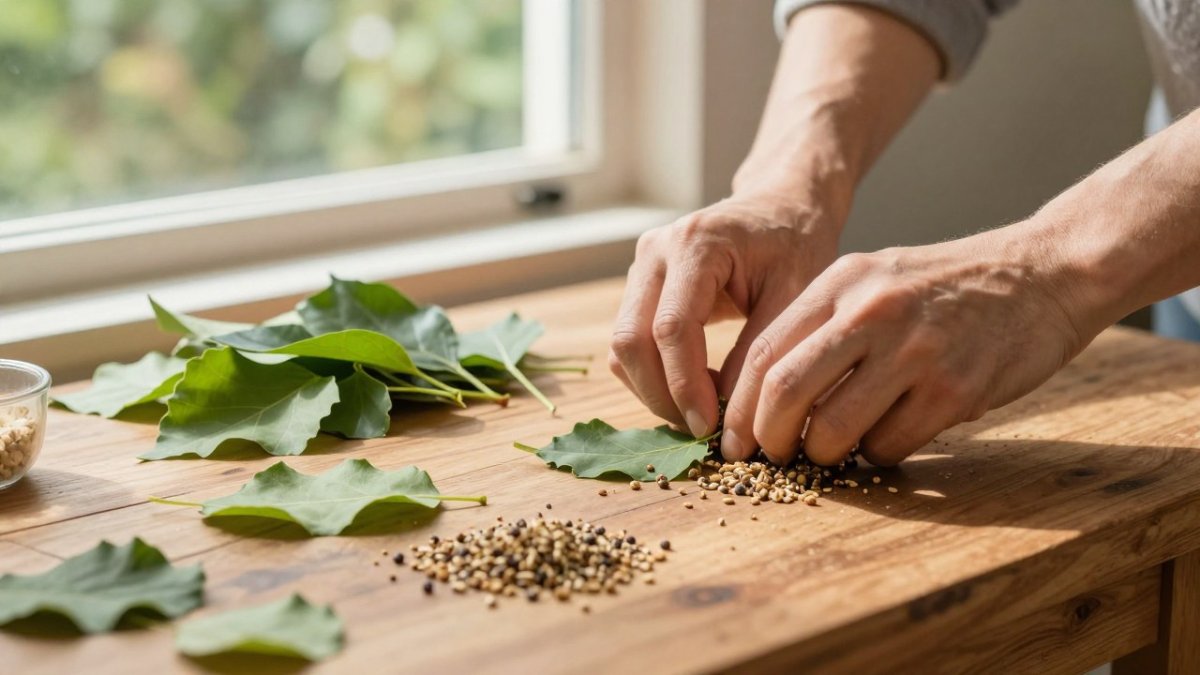
Ask these questions:
- Are the botanicals native to the region, or imported?
- Are they grown locally by known growers, or sourced from a broker?
- Does the brand name the producer or region?
Native Australian botanicals are a good example of local sourcing that you can verify. A brand that names its botanicals and their source is giving you something to test. A brand that only says "premium botanicals" is not.
Native and locally grown botanicals
Locally grown ingredients often mean shorter transport and a clearer chain of custody. They also give you a way to judge the claims. If a producer says its botanicals are grown nearby, you can ask for details. Watch out for brands that describe a "local" feel but list ingredients with no origin at all.
Step 2: Look for an Upcycled Base Spirit and Ingredients
Next, check the base spirit. Many gins use neutral grain spirit, which is made to a standard recipe with little link to any waste stream. An upcycled base is different. It is made from something that would otherwise go to waste.
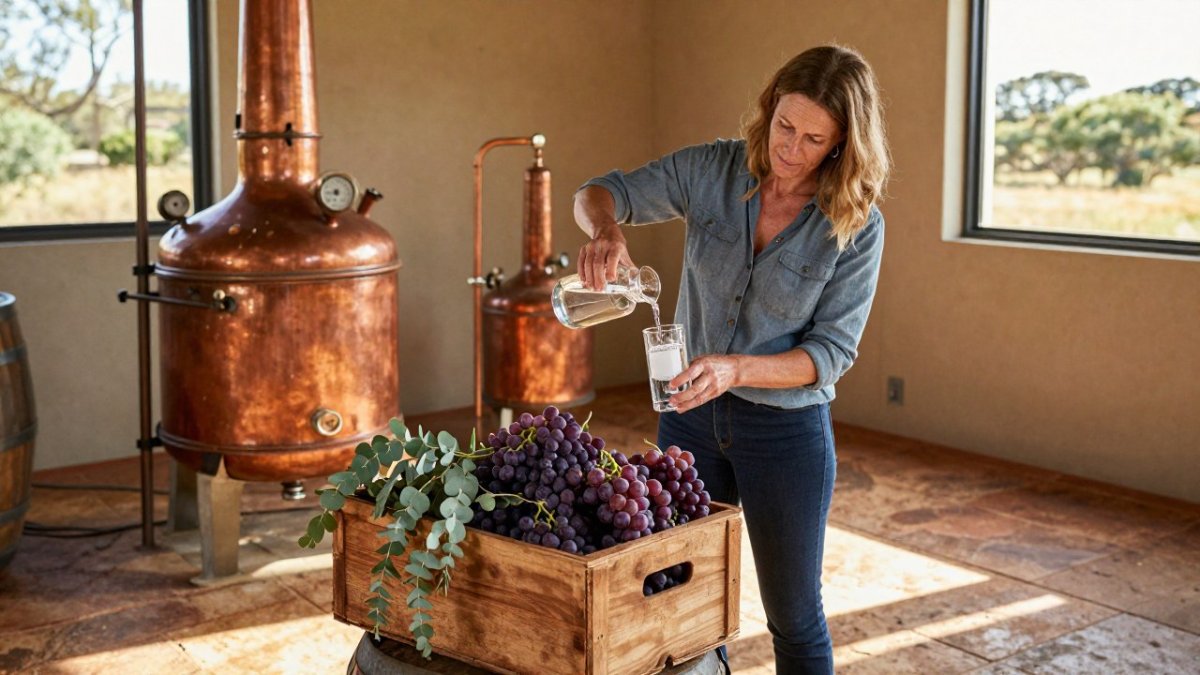
Some producers make their base from leftover wine grapes, which is a practical way to reuse material from the winemaking season. Read about sustainable gin made from wine grapes and what sets it apart. Ask whether the base is upcycled, what it is made from, and what happened to the leftovers. A clear answer is a good sign.
Also look at the wider ingredient list. Organic certification, closed-loop habits such as repurposing spent botanicals, and composting of kitchen scraps all point to a producer that thinks about resources as a whole, not just the bottle.
Step 3: Judge the Bottle, Labels and Closures
Packaging is where many brands focus their green messaging, and it is also where the claims are easiest to check. Look at the glass, the label, and the closure.
Check for these details:
- Is the glass recycled content, and is the bottle recyclable?
- Are the labels made from certified paper, and are they easy to separate?
- Is the closure a natural material such as cork, or a mixed plastic part?
- Does the producer state the bottle weight or recycled percentage?
Heavier bottles usually mean more glass to make and transport. Lighter bottles can reduce emissions, but only if they still protect the spirit and can be recycled.
A simple whole-lifecycle packaging comparison
Use this quick checklist to compare two bottles:
- Glass: recycled content and recyclability
- Label: certified paper, minimal adhesive
- Closure: natural cork or a single, easy-to-separate material
- Transport: lighter weight means fewer emissions per bottle
- End of life: can you recycle every part at home?
A bottle that scores well on most of these points is a stronger choice than one that only prints "recyclable" on the back.
Step 4: Verify Certifications and Third-Party Claims
Labels and websites can say almost anything. Third-party checks are how you test the claims, but only if you know what you are looking at. Most shoppers treat any logo as proof; the useful skill is telling an audited certification apart from a self-declared one.
Start by sorting the claim into one of three types:
- Third-party certified: an independent body has audited the producer against a published standard and issued a certificate. Examples of recognised schemes you may see on Australian bottles include organic and fair-trade certifications. Each credible scheme publishes a public directory or certificate lookup you can search.
- Self-declared: the brand states a practice or figure with no external audit. This is not automatically dishonest, but it is unverified.
- Implied: imagery, colour, or wording that suggests certification without naming one. Treat this as marketing until proven otherwise.
For any named certification, work through these checks:
- Who issued it? A named certifier with a public website and a searchable register is a good sign. A logo with no issuer name is not.
- What is the scope? Certifications attach to a specific site, product, or ingredient, not to a brand as a whole. A certificate covering one botanical does not make the entire bottle certified.
- Is there a chain-of-custody claim? For ingredients, look for wording such as "certified organic" on the specific input, and check whether the certifier covers the supply chain or only the farm.
- Is it current? Certificates have issue and expiry dates. An expired certificate is not evidence of current practice.
- Can you find the producer in the certifier's directory? Most credible certifiers publish a searchable list. If the brand is absent, ask why.
A common pattern is a brand displaying a certification logo for its distillery site while the claim on the front label implies the whole product is certified. Those are different things. Read the scope statement, not just the badge.
Watch out: a brand that names a certificate but cannot tell you who issued it, or points only to its own website as proof, has given you a claim to test rather than evidence. A claim you can check beats a claim you have to trust.
Step 5: Read Emissions, Water and Waste Claims Critically
Many brands now publish figures on emissions, water use, or waste. These can be useful, but only when you can tell what is being measured and against what. A claim like "carbon neutral" without a method or a baseline doesn't tell you much.
When you read these claims, separate four things:
- Boundary: does the figure cover just the distillery, or the whole product lifecycle, botanicals, glass, transport, and end of life? A distillery-only number can look impressive while ignoring the largest impacts.
- Baseline and target: a reduction target needs a starting year and an end date. "We aim to reduce emissions" is not comparable; "cut scope 1 and 2 emissions by a set share against a named baseline year by a stated date" is.
- Absolute versus intensity: emissions per litre of spirit sold can fall while total emissions rise if volume grows. Ask which one is reported.
- What is excluded: offsets, purchased renewable energy certificates, and excluded categories can change the picture. A figure that relies heavily on offsets is not the same as one achieved through reduced energy use.
Measurable, comparable data is far more useful than broad statements.
A practical habit is to look for a short methodology note or a linked report. Producers who publish one usually state the standard they followed, the year covered, and any assurance.
Watch out: a headline percentage with no baseline year, no boundary, and no method is the most common form of unverifiable environmental claim, it sounds precise without being checkable.
Use this quick reference to separate the four things to check in any environmental figure a brand publishes.
| Element | What to ask | Why it matters |
|---|---|---|
| Boundary | Distillery only, or whole lifecycle? | Distillery-only figures can ignore the largest impacts |
| Baseline and target | Named baseline year and end date? | Without them, claims cannot be compared |
| Absolute vs intensity | Total emissions or per litre sold? | Intensity can fall while totals rise |
| Exclusions | Offsets or excluded categories? | Offsets are not the same as reduced energy use |
Spotting Greenwashing Red Flags on Gin Labels and Websites
Some claims are designed to sound green without being backed by anything. Watch for these warning signs:
- Words like "eco", "natural", or "green" with no explanation
- Leaf or earth imagery that suggests a certification that doesn't exist
- Claims about one small action used to cover the whole business
- No named certifier, no date, and no measurable figure
- Sustainability sections that describe commitments but no results
A brand that is open about what it does not yet do is often more trustworthy than one that claims everything. Honest gaps are a sign of a producer that tracks its progress.
Balance matters too. Sustainability sits alongside taste, quality, and price. A gin can be well made and responsibly produced, and a sustainable label does not guarantee the flavour you want. Check tasting notes and ingredients alongside the environmental details.
Buying Sustainable Craft Gin in Australia: Your Next Step
Knowing how to identify sustainable craft gin puts you in a much stronger position at the bottle shop or online. Start with the botanicals, then check the base spirit, packaging, certifications, and emissions data. Each step gives you something concrete to test.
If you'd like to see these principles in practice, explore our sustainable gin range and the native botanicals behind it to see how we apply them. You can also learn more about our approach to sustainable production and the closed-loop practices we use to reduce waste.
Ready to taste the difference? Visit us in the Clare Valley or shop our signature range online and find out what local, sustainable gin tastes like.
Frequently Asked Questions
What makes a gin sustainable?
A sustainable gin is judged across several areas at once: where its botanicals and base spirit come from, how the distillery uses energy, water and waste, what the bottle and packaging are made of, and whether its claims can be checked. Small-batch production alone does not guarantee any of these. Look for specifics such as locally grown botanicals, use of leftover or upcycled ingredients, recycled or recyclable packaging, and a clear account of how spent botanicals and scraps are reused. Specific, verifiable detail is a better signal than general words like eco-friendly.
Does small-batch gin automatically mean it is sustainable?
No. Small-batch describes how much is made per run, not how it is made. A small producer can still use imported ingredients, heavy glass and single-use packaging. Small-batch can make it easier for a distillery to trace ingredients and reuse by-products, but you still need to check the sourcing, packaging and waste practices directly. Treat batch size as one clue among several rather than proof.
How can you verify a gin brand's sustainability claims?
Start by asking the distillery for specifics: which botanicals are local, what the base spirit is made from, and where spent botanicals and kitchen scraps go. Then look for independent certifications and check whether the certifying body publishes a public directory you can search. Claims that are measured, dated and backed by a named auditor carry more weight than unqualified statements. If a brand cannot or will not explain its practices, weigh that as a warning sign.
What should you look for on a gin label when choosing sustainable gin?
Labels can show more than the front design suggests. Check for recycled glass content, recyclability symbols, paper labels and closures, and any certification marks that name the body awarding them. Vague phrases such as natural or green without evidence are less useful than stated ingredients and sourcing. Where the label or website lists native or locally sourced botanicals, you can compare those claims against the distillery's own production information.
