Quick Summary
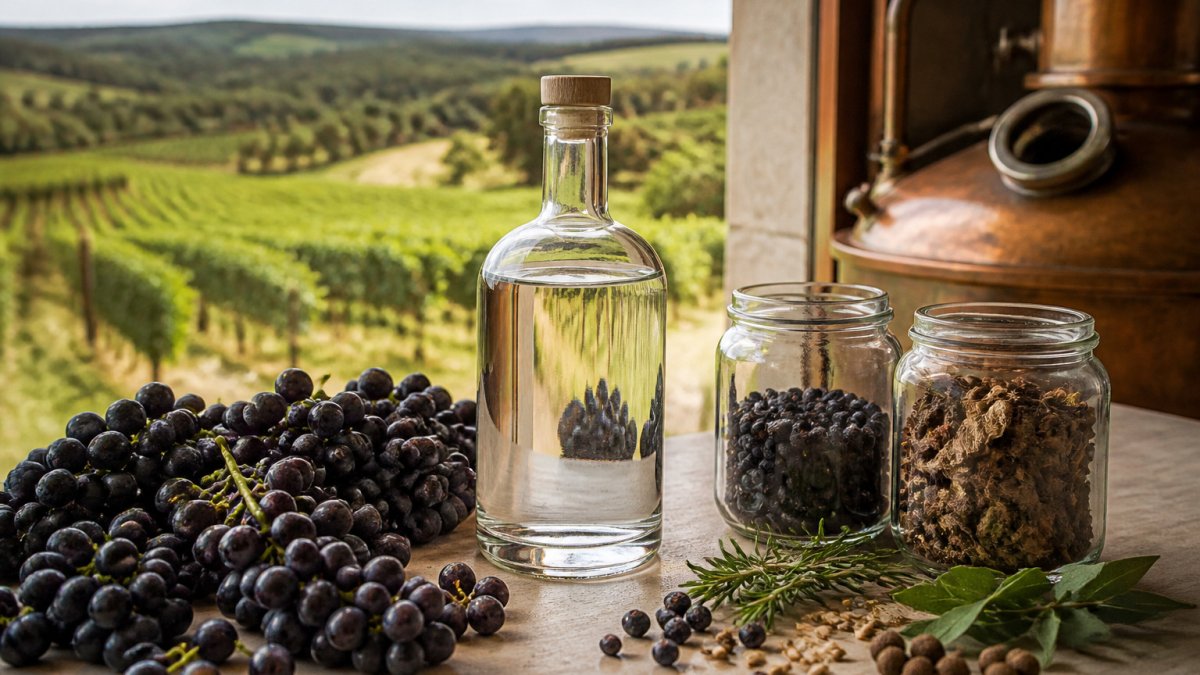
Sustainable gin is gin made from leftover material that would otherwise be wasted, such as surplus wine grapes, and where the producer reuses by-products like spent botanicals and kitchen scraps. Three Little Birds Distillery makes its gin from leftover wine grapes rather than grain, and feeds spent botanicals to livestock and composts scraps for the vineyard.
- Three Little Birds Distillery builds its gin on leftover wine grapes instead of grain.
- Spent botanicals are repurposed to feed local livestock.
- Kitchen scraps are composted for the vineyard.
- Ask producers for specific, checkable practices, not just the word sustainable.
- Look for one measurable improvement, such as energy or water use per litre.
Table of Contents
- What Makes Gin Made From Wine Grapes Different
- How Gin Is Made From Leftover Wine Grapes, Step by Step
- Gin Made From Grape Pomace and Other Winery By-Products
- What a Sustainable Gin Actually Looks Like in Practice
- How to Verify Sustainability Claims on a Gin Label
- Food Safety, Distillation Rules and Responsible Production
- Booking a Tasting or Ordering Your First Bottle
- Frequently Asked Questions
What Makes Gin Made From Wine Grapes Different
Last Updated: November 1, 2026
Gin made from wine grapes starts with a different base spirit, and that single choice changes how the final drink tastes. Three Little Birds Distillery builds its gin on leftover wine grapes rather than grain. For the basics, read what grape spirit gin is.
Most gin in Australia is made from grain. Grape-based gin is less common, and the difference shows up in the glass.
Grape spirit versus grain neutral spirit
Grain neutral spirit is distilled to be as clean and flavourless as possible. Its job is to act as a blank canvas. Grape spirit carries more of its origin with it, so the base itself contributes flavour.
A practical way to think about it: grain spirit is a neutral canvas, while grape spirit is a canvas with its own faint colour. Neither is wrong, but they produce different drinks.
How juniper and native botanicals fit in
Juniper still defines gin, so it stays at the centre of the recipe. The grape base changes how juniper sits alongside the other botanicals.
Native Australian botanicals add another layer. Local ingredients such as lemon myrtle and pepperberry are part of the botanical range used in the Three Little Birds Distillery gins. Learn more about what Australian native botanicals taste like.
How Gin Is Made From Leftover Wine Grapes, Step by Step
Making gin from wine grapes is not the same as distilling wine. Gin made from grape material is first fermented into a low-alcohol wash, then distilled, and only then becomes the base for gin. Fermented wine itself is not gin, and a wine grape base is not simply wine with juniper added.
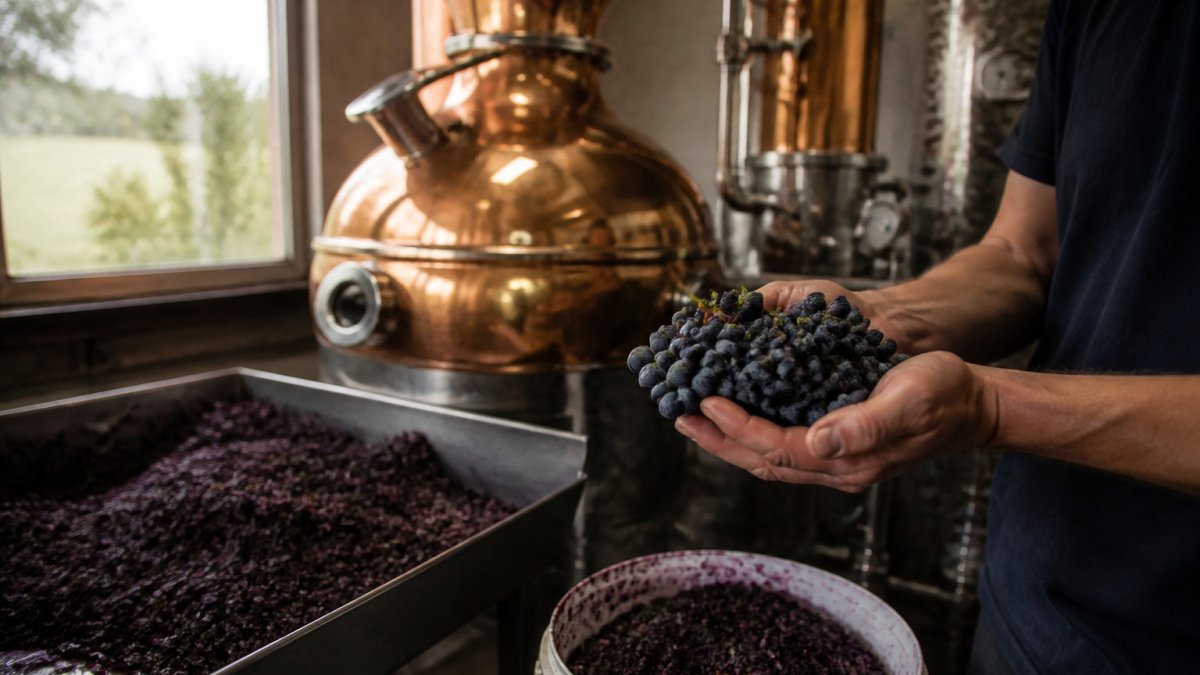
Here is the practical sequence, with the mechanism behind each step:
- Collect and prepare the grape material. Leftover wine grapes, whether surplus fruit, second-run pressings or pomace, are gathered and checked for condition. Sugar content and acidity at this stage determine how well the wash will ferment.
- Ferment the base. Yeast converts the sugars in the grape material into alcohol, producing a wash typically in the low single digits to low teens by volume. The fermentation temperature and yeast strain influence the fruity or neutral character that survives into the final spirit.
- Distil the wash into grape spirit. The wash is distilled to separate alcohol from water and solids. A common approach is a two-stage distillation: a first pass produces a low-strength "low wines" spirit, and a second pass refines it into a cleaner, higher-strength grape spirit. The cut between heads, hearts and tails is where the distiller decides how much grape character to keep.
- Infuse the botanicals. Juniper and other botanicals are steeped in the grape spirit, either in a pot still or in a vapour basket. Steeping time and temperature control how much oil and aroma is extracted.
- Redistil. The infused spirit is distilled again to capture the aromatics while leaving behind heavier, unwanted compounds. This is the step that turns flavoured spirit into gin.
- Dilute and bottle. The gin is brought to bottling strength with water, filtered if the producer chooses, and packaged.
| Step | What happens | What it affects |
|---|---|---|
| Fermentation | Yeast converts grape sugars to alcohol | Base flavour and wash strength |
| First distillation | Alcohol is separated from the wash | Yield and raw spirit character |
| Botanical infusion | Botanicals steep in the grape spirit | Aroma and flavour profile |
| Redistillation | Aromatics are captured and refined | Final balance and clarity |
| Dilution | Water brings the gin to bottling strength | Mouthfeel and alcohol by volume |
The exact recipe, still type and cut points vary between producers, so treat these steps as a general outline rather than a production specification.
Gin Made From Grape Pomace and Other Winery By-Products
Grape pomace is the skin, seed and stem material left after pressing. Winemaking produces large volumes of it, and using it is one way to reduce waste. Pomace can be used in various ways, including spirit production, though the process and yield depend on the producer and the material.
What a Sustainable Gin Actually Looks Like in Practice
A sustainable gin is one where the producer can show specific practices, not just use the word. At Three Little Birds Distillery, leftover wine grapes become the base spirit, spent botanicals are repurposed to feed local livestock, and kitchen scraps are composted for the vineyard.
That loop is the practical test. Ask whether waste from one stage becomes an input for another. A brand that can describe where each by-product goes is giving you more information than one that only states it is eco-friendly. See how the closed loop works in practice.
How to Verify Sustainability Claims on a Gin Label
Sustainability claims on spirits vary widely in how much evidence sits behind them. A label can say "sustainable" without defining what that means. The practical test is whether the producer can point to specific, checkable practices across the lifecycle of the bottle. True transparency requires an honest assessment of the sustainable viticulture practices employed in the field to ensure that every stage of production aligns with genuine environmental stewardship.
Use these criteria to separate substance from marketing:
- Grape origin and reuse. Ask what specific input the gin reuses, surplus wine, second-run pressings or pomace, and where it comes from. A named vineyard region or winery relationship is more verifiable than a vague "leftover grapes" claim.
- Organic certification. If organic ingredients are claimed, look for a recognised Australian certification mark or a certifier's name on the label or website. Certification involves an audit trail; an uncertified organic claim is harder to verify.
- Renewable energy. Ask whether the distillery uses renewable electricity, and whether that is grid-sourced, on-site solar, or purchased through a certified scheme. The distinction matters for the emissions profile.
- Water and energy intensity. Distillation is energy-intensive and uses cooling water. A producer with real practices can usually describe how they manage cooling water, whether they recirculate it, and whether they have measured energy use per litre of spirit.
- Packaging. Check bottle weight, recycled content, label material and whether the closure is recyclable.
- Transport and distribution. Ask where the gin is bottled and how it reaches the customer.
- By-product destinations. Spent botanicals, pomace and wash residues should have a defined destination, livestock feed, compost, or further processing. A producer who can describe where each by-product goes is giving you more information than one that only states it is eco-friendly.
- Independent audit or certification. Recognised environmental management or product certification schemes provide third-party verification. If a claim is not certified, ask what internal measurement supports it.
No single criterion proves a gin is sustainable. The point is to look for a pattern of specific, measurable practices rather than a single claim. A producer with real practices should answer these questions without difficulty; vague answers are a signal to look harder.
Food Safety, Distillation Rules and Responsible Production
Distilling spirits in Australia involves licensing and compliance obligations, and these apply to every producer regardless of base spirit. Responsible production also means handling fermentation and distillation safely, labelling accurately, and meeting alcohol duty and sale rules.
For current requirements, check the official guidance from the Australian Taxation Office and the relevant state or territory liquor regulator, as rules differ by jurisdiction. Responsible drinking matters too: enjoy any spirit in moderation.
Booking a Tasting or Ordering Your First Bottle
If you want to taste the gin before buying, the Sevenhill tasting room is the easiest place to start. The Sevenhill tasting room is a good option for a day trip or a group outing. You can book a guided gin flight and see visit details. Pricing depends on quantity, dates, and delivery, so check the current details on the Three Little Birds Distillery website before you visit.
For those ordering online, shop the range on the Three Little Birds Distillery website to see what is available. Ordering a first bottle is a good way to judge whether a grape-based, native-botanical gin suits your palate.
Frequently Asked Questions
How is gin made from wine grapes?
Gin made from wine grapes starts with a neutral grape spirit, distilled from fermented grapes rather than grain. Leftover or surplus grapes are fermented into a wine-like base, which is then distilled to a clean, neutral spirit. Botanicals are added during distillation or by infusion, giving the gin its flavour. The result is a spirit with a softer, fruitier base than most grain-based gins. Production is regulated, so producers must hold the relevant Australian licences and follow excise rules.
Can leftover wine grapes be used to make gin?
Yes. Wine grapes that are surplus, damaged or not needed for wine can be fermented and distilled into a grape spirit suitable for gin. This reduces waste from the vineyard and gives a use to fruit that might otherwise go unsold. The quality of the base spirit depends on grape variety, ripeness and how cleanly the fermentation and distillation are run. Producers should confirm that their grape sourcing and spirit production meet Australian food safety and licensing requirements.
What should I look for on a sustainable gin label?
Look for clear statements about where the grapes and botanicals come from, whether the base spirit is made from grapes or by-products, and how spent botanicals and waste are handled. Organic certification, where held, should be shown with the certifying body named. Vague words such as eco or green on their own do not prove anything. A credible label names specific practices, such as using surplus grapes, composting or reusing spent botanicals, and states the alcohol content and bottle volume clearly.
How can you verify a distillery's sustainability claims?
Ask the distillery which specific practices support its claims, such as the source of its grapes, how spent botanicals and pomace are used, and whether it composts waste. Check for organic or environmental certifications and confirm the certifying body. Ask whether any figures, such as waste diverted or water used, are measured and how they were calculated. A distillery that answers these questions with specifics, and is willing to share its records, is generally more trustworthy than one that relies on general wording.
Three Little Birds Distillery makes gin that reflects its Clare Valley setting, and it is worth tasting in person or at home. Start with a single bottle, try it in a simple gin and tonic, and see whether the grape base changes what you expect from gin.
