Last Updated: November 2, 2026
Quick Summary
To choose Australian craft gin, look for a named distillery and a stated botanical list, because craft is a control category rather than a size category. If a bottle can't tell you who made it and where, keep walking. Match the style to how you actually drink, and treat vague terms like small batch as decoration until proven otherwise.
- Craft gin means a small-batch independent distillery controls its own botanical recipe, and the term has no legal definition.
- Juniper must dominate a gin, and a short botanical list done well beats fifteen done vaguely.
- Taste neat then add roughly one part water to four or five parts gin to reveal hidden notes.
- Match delicate floral gin to G&Ts and juniper-forward London Dry to Martinis rather than the reverse.
- A named distillery, stated botanicals, batch number and explainable base spirit justify a premium price.
Table of Contents
- What Makes a Gin a Craft Gin
- The Gin Botanicals Guide: Reading a Bottle Before You Buy
- Australian Native Botanical Gin: What to Look For
- How to Taste Gin Like a Distiller
- Matching Gin Styles to the Way You Actually Drink
- Budget vs Premium: What You Are Really Paying For
- Sustainability, Storage and Serving: The Details That Decide Quality
- Book a Tasting Flight Before You Commit to a Bottle
- Frequently Asked Questions
What Makes a Gin a Craft Gin
Craft gin is a spirit distilled in small batches by an independent distillery that controls its own botanical recipe, rather than a mass-produced product formulated for national supermarket distribution. The term carries no legal definition, which is exactly why it gets stretched.
Most guides get this wrong: they treat "craft" as a size category. It is really a control category. Who chose the botanicals? Who ran the still? Who decided when to cut the heads and tails?
Here is how to choose Australian craft gin without paying for a label. Look for a named distillery and a stated botanical list. If a bottle can't tell you who made it and where, keep walking.
The Gin Botanicals Guide: Reading a Bottle Before You Buy
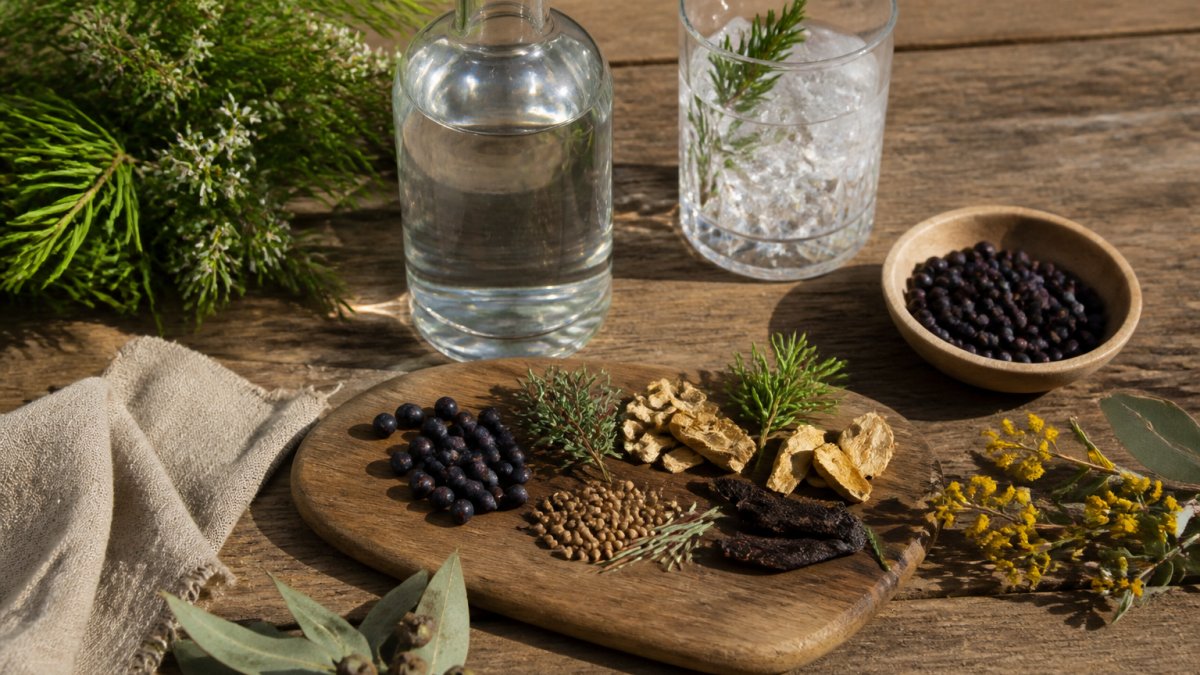
A gin botanicals guide starts with one fact: juniper must dominate. Everything else, and there can be a dozen or more ingredients, sits around that spine. The label is your first tasting note, so read it before you read the price tag.
- Juniper-forward: classic, piney, dry. The safest all-rounder.
- Citrus-forward: lemon myrtle, finger lime, orange peel. Bright and easy to drink.
- Floral: delicate, aromatic, lighter on the palate.
- Spiced: Tasmanian pepperberry, wattleseed, warm and savoury.
- Barrel-aged: rested in oak, golden in colour, closer to a whisky in weight.
A short botanical list is not a weakness. Three or four ingredients done well beat fifteen done vaguely. What you want to see is coherence: a recipe where the native botanicals have a job, not just a story.
Australian Native Botanical Gin: What to Look For
Australian native botanical gin leans on ingredients that grow here and nowhere else, and that is the whole point. Lemon myrtle brings a clean citrus lift without the sharpness of peel.
The mistake buyers make is assuming "native" means "subtle". It often means the opposite: pepperberry and strawberry gum can dominate a blend if the distiller isn't careful.
If you want to know what these botanicals actually taste like before you commit, our guide to Strawberry Gum & the Botanicals That Make Our Gin Australian breaks down each one in plain language.
How to Taste Gin Like a Distiller
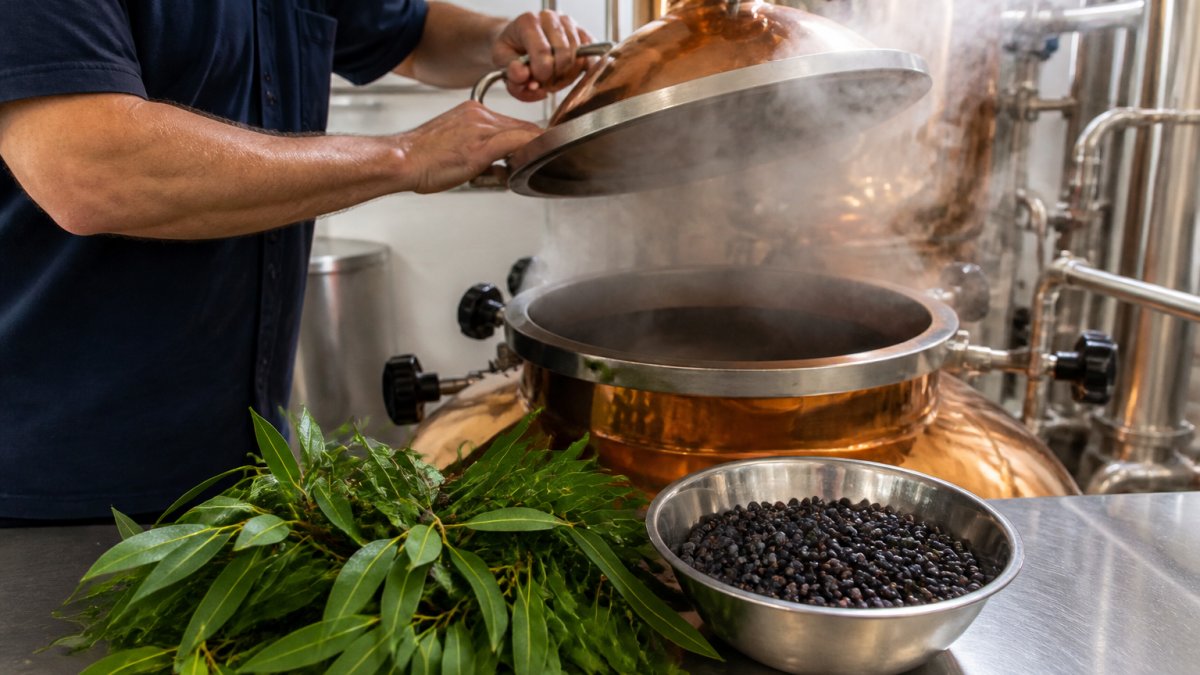
Tasting gin properly takes about five minutes and no equipment beyond a clean glass, but the difference between a casual sip and a useful assessment is method. Distillers run the same sequence every time because consistency is what makes comparisons fair, and because the palate is easily fooled by temperature, glassware and the order in which you taste.
Start with the right conditions. Use a tulip-shaped copita or a small wine glass rather than a tumbler; the narrowed rim concentrates aromatics and stops the alcohol from numbing your nose.
Work through four checks in order:
- Nose first, gently. Hold the glass below your chin and take short sniffs rather than one long inhale. Ask three questions: is juniper the first thing you notice, what comes second, and does anything smell sharp or solvent-like? A spirit that smells hot at the nose usually needs water before it will tell you anything useful.
- Sip neat, then dilute. Take a small sip and let it coat your tongue before swallowing. Then add a few drops of room-temperature water, roughly one part water to four or five parts gin is a common starting point, and nose again. Water lowers the alcohol's grip on the aromatics and often reveals citrus, floral or spice notes that were hidden. Compare the neat and diluted impressions; a gin that improves dramatically with water is usually well made, while one that collapses was relying on strength rather than balance.
- Note the mouthfeel. Oily, silky, thin, hot? Texture separates a good gin from a great one, and it is the hardest thing to fake in a small still. Roll the spirit around your mouth and pay attention to the middle palate, not just the initial hit.
- Time the finish. A short, sharp finish fades within seconds. A long one keeps giving you something to think about, pepperberry heat, citrus oil, a dry juniper tail. Count roughly how long the flavour persists; a finish that lasts well beyond ten seconds is a useful marker of quality.
Watch out: tasting several gins in a row without resetting your palate will flatten your impressions. Taste from lightest to boldest so a navy strength doesn't wipe out a delicate floral pour.
If you want a simple scoring sheet, rate each gin out of five on four axes, juniper presence, botanical balance, texture and finish length. That gives you a comparable record rather than a vague memory, and it is the same logic buyers use when deciding whether a bottle is worth its price.
Australian Distillers Association guidance on tasting and spirit categories is a useful reference for how the industry classifies and assesses spirits.
Matching Gin Styles to the Way You Actually Drink
Match the gin to the drink, not the other way around. A delicate floral gin disappears in a Negroni. A navy strength bottle overwhelms a light tonic. Get this pairing right and you stop wasting money on bottles that fight your habits.
| If you mostly drink | Choose | Because |
|---|---|---|
| G&Ts on a warm afternoon | Citrus-forward or floral | Bright, refreshing, holds up to tonic |
| Martinis | Juniper-forward London Dry | Clean, dry, spirit-forward |
| Negronis and stirred cocktails | Navy strength or spiced | High ABV and bold botanicals hold their ground |
| Neat or over ice | Barrel-aged | Rounder, warmer, sippable |
| Whisky and you're curious | Barrel-aged or spiced | Familiar oak and warmth, less pine |
If you are still working out where you sit, our plain-language breakdown of the six main gin styles will save you a few wrong turns.
Budget vs Premium: What You Are Really Paying For
Small-batch gin can cost more to make because lower volume spreads production costs across fewer bottles. Pricing for our range depends on the product, and our website has current prices.
Most guides stop there and simply list products. The useful question is how to tell whether a higher price is earned. A practical test is to separate what you are paying for into four buckets and ask which ones the label actually evidences:
- Production method. Small-batch distillation, a named still and a stated cut point (where the distiller separates heads, hearts and tails) cost more in labour and yield less spirit per run. A bottle that names its still or batch size is usually telling the truth about method.
- Botanical cost and control. Native botanicals such as lemon myrtle, finger lime and Tasmanian pepperberry are expensive to source at consistent quality. A stated botanical list, rather than a vague "native botanicals" line, signals the recipe is fixed and costed rather than improvised.
- Base spirit. A distiller who can explain the base spirit, grain, grape or molasses, and whether it is bought in or fermented on site, is usually more transparent across the rest of the process.
- Packaging and story. A heavy bottle and a regional narrative add cost but not flavour. These are legitimate marketing choices, but they are the first things to discount when judging value.
Where the premium is justified: a named distillery, a stated botanical recipe, small-batch production, a batch number and a base spirit the maker can explain.
A common pattern in the market is that the steepest price jumps sit at the entry and top ends.
Watch out: "small batch" and "handcrafted" are not regulated terms, so a premium price can rest on language alone.
Our comparison of small batch versus commercial gin walks through the production differences so you can judge whether a price is earned.
Sustainability, Storage and Serving: The Details That Decide Quality
Sustainability claims are easy to make and hard to check, so ask what happens to the waste. A distillery that can name where its spent botanicals go, and what happens to its base spirit, is usually telling the truth about the rest of its process too.
Storage matters more than most drinkers realise. Keep gin upright, away from direct sunlight and heat, and it will hold its character for years. Once opened, the aromatics soften gradually, so finish a bottle within a reasonable stretch rather than saving it for a special occasion. Serve it chilled, in a clean glass, with a garnish that echoes the botanicals rather than fighting them.
Book a Tasting Flight Before You Commit to a Bottle
A tasting flight is the cheapest way to avoid buying the wrong bottle. You taste before you spend, and you learn what your palate actually responds to rather than what a label tells you it should.
At our Sevenhill tasting room, you can taste the range. When you are ready to reserve, check our website for current details.
Best for: anyone buying their first craft bottle or narrowing down a style. Skip if: you already know exactly what you want and just need it shipped.
Frequently Asked Questions
What makes a gin a craft gin?
A craft gin is made by a small distillery in batches it controls from start to finish, rather than bought in as neutral spirit and flavoured at scale. Look for a named distillery, a stated batch size, and a base spirit you can trace. Batch size and transparency matter more than the word craft on the label.
How do I choose a gin based on its botanicals?
Start with the style you already enjoy. If you like bright, citrus-forward drinks, look for lemon myrtle or finger lime on the label. If you prefer spice, wattleseed and Tasmanian pepperberry are good signals. A gin botanicals guide on the bottle or website should list every botanical, not just the headline native one. Fewer than six botanicals usually means a simpler, cleaner profile; ten or more suggests layers worth tasting neat first.
What is the difference between London dry gin and Australian craft gin?
London dry is a production method: juniper-led, nothing added after distillation except water, and no sweetening above a small threshold. Australian craft gin can follow that method or take a contemporary path, adding native botanicals like lemon myrtle, finger lime or wattleseed, or finishing in barrels. Neither is better. London dry suits a classic gin and tonic; contemporary Australian styles often show more floral and citrus lift.
How can I tell whether a gin is good quality?
Taste it at room temperature, diluted with a splash of water, before adding tonic. Good gin stays balanced as it warms: juniper remains present, alcohol does not sting, and the finish is clean rather than sharp. Check the label for a stated ABV, batch number and distillery address. A gin that tastes flat or harsh neat rarely improves much in a glass, so taste before you commit to a full bottle.
Does the base spirit affect the taste of gin?
Yes. Base spirit is the majority of what you taste, so a grain, grape or molasses base changes the texture and weight of the gin. Grape-based spirits often give a rounder mouthfeel; grain bases tend to taste crisper. Ask what the base is made from before you buy.
Choosing well comes down to three things: a named distillery, a botanical list you can read, and a taste test before you spend. If you would rather start with the taste, book a guided flight at Three Little Birds Distillery and compare small-batch gins made with native Australian botanicals, produced using leftover wine grapes and spent botanicals repurposed to feed local livestock. Get started with Three Little Birds Distillery and find the bottle that fits how you actually drink.
